Mary Ellen Bute
(1906-1983)
CVM's Bute Research Portal
THIS PAGE: News, plus Upcoming and Recent Screenings & Exhibitions
Seeing Sound: Bute Retrospective Program & About the Films
Selected Bibliography and Texts
Selected Statements by Bute About her Films
Production Material, Art, Ephemera (coming soon)
About Finnegans Wake
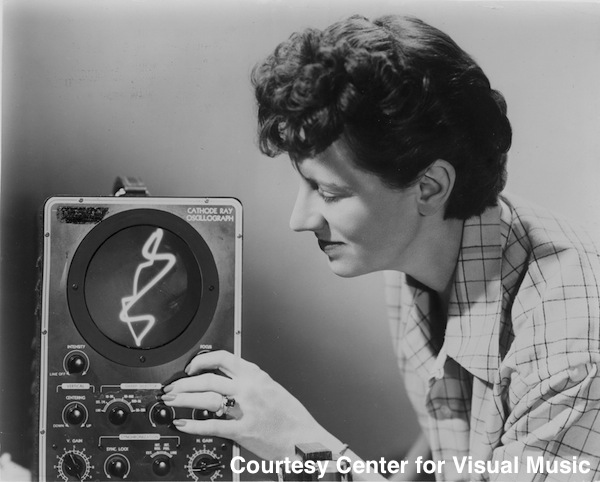
CVM is the authorized distributor of Bute's abstract films, having received distribution rights from Bute's distributor Cecile Starr, plus her Bute 16mm film and video collection. CVM's Bute collection includes film prints, digital masters and exhibition copies, concept paintings for Spook Sport, animation plans, clipping, papers, videos. Plus an extensive collection of Bute and Ted Nemeth's original photographic materials relating to her oscilloscope experiments.
RIP Cecile Starr (1921-2014), Film historian, critic, author and Bute's long-term distributor.
About Bute's Abstract Films
A pioneer of visual music and electronic art, Mary Ellen Bute produced over a dozen short abstract animations between the 1930s to the 1950s. Set to classical music by the likes of Bach, Saint-Saens or Shostakovich, and filled with colorful forms, elegant design and sprightly, dance-like-rhythms, Bute's filmmaking is at once formally rigorous and energetically high-spirited, like a marriage of high modernism and Merrie Melodies. In the late 1940s, Lewis Jacobs observed that Bute's films were "composed upon mathematical formulae depicting in ever-changing lights and shadows, growing lines and forms, deepening colors and tones, the tumbling, racing impressions evoked by the musical accompaniment." Bute herself wrote that she sought to "bring to the eyes a combination of visual forms unfolding along with the thematic development and rhythmic cadences of music." (Ed Halter)
Known for her pioneering early abstract films (some of which were screened regularly at Radio City Music Hall, New York in the 1930s), Bute made a series of Visual Music films which she called "Seeing Sound." CVM's Seeing Sound: Bute Retrospective Program features all 14 of her short abstract films, including some rarely-seen films, most in 16mm prints: Rhythm in Light, 1934; Synchromy No. 2, 1935; Dada, 1936; Parabola, 1937; Escape, 1937; Spook Sport (animated by Norman McLaren), 1939; Tarantella, 1940; Polka Graph, 1947; Color Rhapsodie, 1948; Imagination, 1948; New Sensations in Sound, 1949 (RCA Commercial); Pastorale, 1950, Abstronic, 1952 and Mood Contrasts, 1953. (CVM)
See Retrospective page for brief film descriptions and booking info. Scroll down here for events and screenings.
Bute T-shirts and hoodies! Proceeds benefit CVM's digitization and exhibition programs. Please visit CVM's shop at spring.com
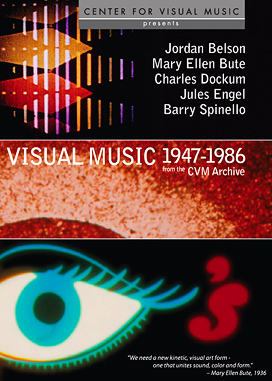
Three Bute films are included on CVM's Visual Music 1947-1986 from CVM Archive DVD (2017 release): Polka Graph, Color Rhapsodie and Abstronic. For private home use and classroom use, not for screenings.
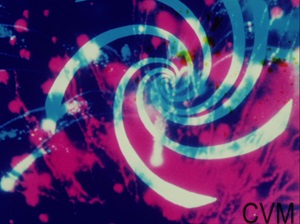
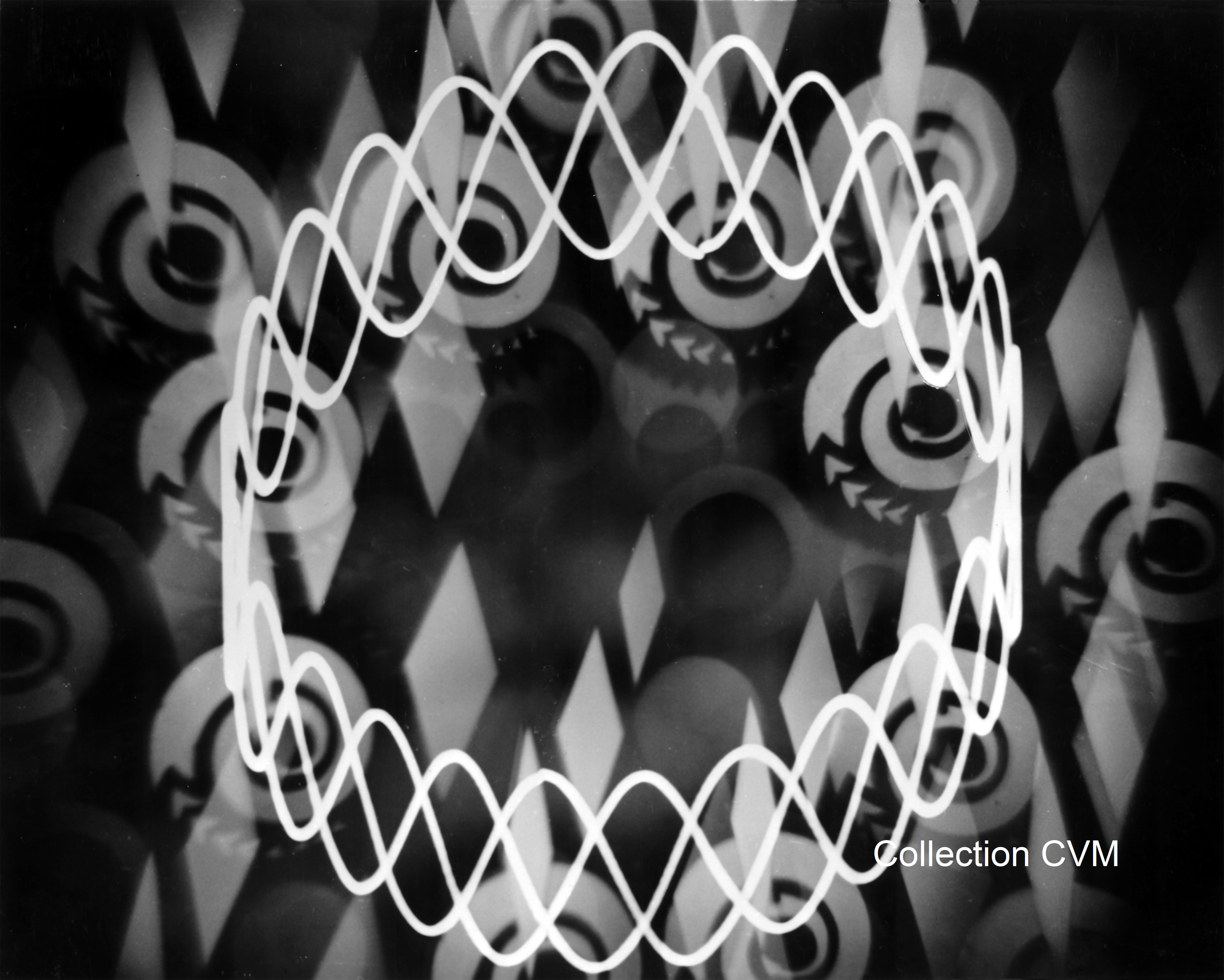
Full details here. Available through CVM directly or at CVM's online shop. Image above from Polka Graph.
Seeing Sound: Mary Ellen Bute Retrospective Program and other print rentals
Please visit this page for info on the Bute Retrospective film program, or to rent other Bute films (16mm or digital)
Screenings and exhibitions, 2026
September 2, Zurich. Bute's Rhythm in Light included in a group exhibition at Museum für Gestaltung Zürich. Digital, looping. Opens Sept 2, through February 21, 2027.
September, Baden, Switzerland. One Bute film in Fantoche International Animation Festival, one screening.
September 22, Los Angeles. Bute's Rhythm in Light and Tarantella in a group exhibition at the new Lucas Museum. Daily film screenings looping in two theatres, digital.
June, Basel, Switzerland. Art Basel, Zero 10 exhibition of 100 Digital Masterpieces included 2 Bute /Nemeth oscilloscope test photos.
Screenings and exhibitions, 2025
Closed July 13 - Bute's Color Rhapsodie in an exhibition at the Academy Museum of Motion Pictures, Los Angeles, plus pages from her portfolio about her Seeing Sound films, from CVM. Opened October, 2024.
March - June. Tarantella screened in a group exhibition at Focal Point Gallery, Essex, UK.
January, Sydney. 2 Bute films screened at Art Gallery of New South Wales, in a children's animation program from CVM.
Screenings and exhibitions, 2024
October 6 opening - Bute's Color Rhapsodie in an exhibition at the Academy Museum of Motion Pictures, Los Angeles, plus ephemera from CVM. Through July, 2025.
September 22, Brussels - two films screened at Bozar.
August 20 opening, Los Angeles - Rhythm in Light is included in an exhibition at the Getty Museum, through November.
August 8, Brunswick, ME - Tarantella was included in a compilation program at Bowdoin College Art Gallery.
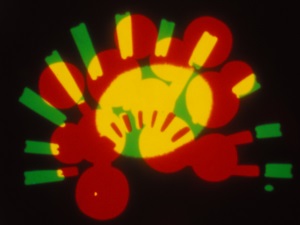
June 4 opening - Mary Ellen Bute: Rhythms in Light. An exhibition of five Bute films from CVM at Eastman Museum, Rochester, NY. Daily, looped, digital versions. Through Sept. 1. Stills from Color Rhapsodie and Tarantella above; also featured are Rhythm in Light, Abstronic and Spook Sport. CLOSED
November - Tarantella in a Czech Republic festival, news soon.
Screenings and exhibitions, 2023
Color Rhapsodie screened at the Metropolitan Museum of Art, New York, in their series, Short Films for Short Nights, July 7.
Abstronic screened in LACMA's screening at REDCAT, Los Angeles, July
Abstronic was included in an exhibition at Shenzhen Museum of Contemporary Art, China, organized by ZKM, opened April.
Two films were included in a group exhibition The Color of Sound at Sun Valley Museum of Art, Sun Valley, Idaho, Jan-March.
Abstronic screened twice at M+ Museum, Hong Kong, Jan-Feb.
Recent screenings and exhibitions, 2022
Tarantella was included in CVM's new program at the National Gallery of Art, Washington DC, Color Rhythms. One screening, November.
Rhythm in Light was included in the Kinetismus: 100 Years of Electricity in Art exhibition at Kunsthalle Prague. Feb - August.
Polka Graph screened in a special Visual Music program at Hiroshima Animation Festival, August.Two Bute films (Abstronic and CVM's new 4K restoration of Tarantella) plus archival material from the CVM Collection, were included in the Women in Abstraction exhibition at Guggenheim, Bilbao. Through February 27, 2022.
June - Color Rhapsodie screened at ACMI, Melbourne, in CVM's Oskar's Legacy program, accompanying the Fischinger Retrospective screening.
Recent screenings and exhibitions, 2020-21
Two Bute films (Abstronic and a new 2K transfer of Tarantella) plus archival material from the CVM Collection, were included in the Women in Abstraction exhibition at Centre Pompidou, Paris. Closed August 2021. CVM thanks Brad and Mary Glanden for their support for the digitization of Tarantella.
Color Rhapsodie and Abstronic screened at Tokyo Photographic Art Museum, Yebisu Festival for Art & Alternative Visions, in a new CVM program on Motion Graphics and Visual Music. Feb 6, 11 and 21, 2021. Program details
Three Bute films were installed in the Soundmuseum exhibition at D Museum, Seoul, Korea. A special visual music section from CVM included 12 films by Bute, Fischinger and others (digital display). May 19, through December 27, 2020.
Color Rhapsodie screened at ANIFILM Festival, Liberac, Czech Republic, October 6-11, 2020, in the new CVM program Oskar's Legacy: Films Influenced by Fischinger.
One Bute film will be included in ZKM's Art in Motion exhibition in Beijing (postponed, news tba).
Reent screenings and exhibitions, 2019 and earlier
Bauhaus und Amerika exhibition at LWL, Munster, Germany included Bute's Rhythm in Light (digital). Nov 2018 through March, 2019.
Two Bute films were included in the Art in Motion exhibition at ZKM, Karlsruhe, Germany. July 2018 through February 2019 (digital display)
November, 2019 - Abstronic screened at Mar del Plato Festival, Argentina, in a program curated by Harvard Film Archive
February, 2019 - CVM's Seeing Sound: Bute Retrospective screened at Filmoteca Españole, Madrid.
December, 2018 - one film in CVM's screenings at Castle Rocco Sinibaldo, Italy
November - Polka Graph screened at Block Museum's Designers on Film series
October - one film in CVM's screening at Sonoma Film Institute, Sonoma County, CA
October - Rhythm in Light screened at Anim'est Festival, Romania
August, 2018 - Three Bute fims installed (digital) in CCCB Barcelona's Inner Screen exhibition.
August 15-16, 2018 - Several Bute films (Mood Contrasts on 16mm and two digital) screened at CVM's Visual Music Symposium, at Sebastopol Center for the Arts and Sonoma State University. Details on the accompanying six-program Screening Series.
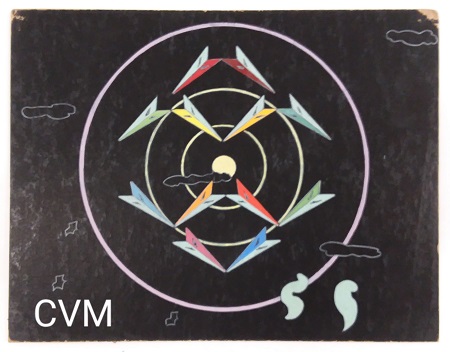
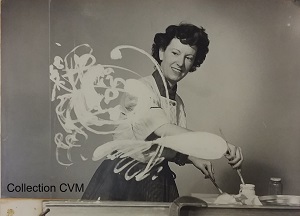
Concept painting for Spook Sport by Bute, Collection Center for Visual Music
Past Retrospective programs and other screenings (continued)
February 3, 2018 - CVM's Seeing Sound: Bute Retrospective screened at Museum of Fine Arts, Houston, TX, in association with Aurora Picture Show and CVM.
October 19, 2017 - CVM's Bute Retrospective screened at Princeton University, in Light Industry's series
September 29, 2017 - 2 Bute films screened in CVM's Visual Music salon at Chroma Gallery, Santa Rosa, CA
August, 2017 - Bute Retrospective screened at Sight Unseen series, Baltimore, MD
April 30, 2017 - Bute Retrospective screened at Cinefamily, Los Angeles. TRAILER
October 11, 2016 - Polka Graph screened at CVM Salon at Horse Hospital, London. Also October 12 at Oxford University, Wolfson College.
October 27, 2016 - Mood Contrasts and Tarantella screened at Harvard Art Museums, Cambridge, MA.
September-November 2016 - Polka Graph screened (digitally, looped) in an exhibition at Laband Gallery, LMU, Los Angeles
October 17, 2015, Newark, NJ. Tarantella screened at Newark Museum in a program from Center for Visual Music, "Color in Visual Music," part of the Museum's Color Festival, Family Day programming for children.
October 1, 2015, New York: Bute films Spook Sport and Tarantella screened at Lincoln Center. Center for Visual Music and The New York Public Library for the Performing Arts, Dorothy and Lewis B. Cullman Center, presented a Cecile Starr Tribute Celebration on Thursday, October 1, at Lincoln Center, New York. 16mm.
March 25, 2015 - Mood Contrasts, 16mm print screens at Ann Arbor Film Festival.
December 17, 2014 - Mood Contrasts, 16mm print screens at Cinefamily, Los Angeles. Print courtesy CVM.
September 2014 - Seeing Sound: Mary Ellen Bute Retrospective at Harvard Film Archive, Cambridge, MA
August 2014 - Tarantella screened at Milwaukee Film
June 2014 - Abstronic screened in Code + Motion at New Media Art and Sound Summit, Austin Museum of Digital Art
April 2014 - Tarantella screened in CVM's "New Restorations and Discoveries" program at Bard College (Hudson Valley, NY)
March 2014 - Abstronic screened in Code + Motion at Vector Game + Art Convergence Festival, Toronto
Nov. 5, 2013 - Mary Ellen Bute Retrospective at Light Industry, Brooklyn NY
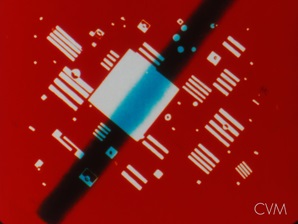
Still from Mood Contrasts
April 10, 2010 - Seeing Sound: Mary Ellen Bute Retrospective at Northwest Film Forum's special series, Visual Music:Sensory Cinema Seattle, WA
January - May 21, 2010 - Spook Sport screens in CVM's second Nonobjective Films 1920-1950 series at The Guggenheim Museum, New York
October 2009-February 2010 - Tarantella screens in CVM's Nonobjective Films 1920-1950 Series at The Guggenheim Museum, New York, accompanying the KANDINSKY exhibition.
October 3, 2009 - Bute Retrospective at Deutsches Filmmuseum, Frankfurt, Germany
September 19, 2009 - Bute Retrospective at Seeing Sound Visual Music Symposium, Bath Spa University, Bath, UK
September 2009 - Mood Contrasts screened in CVM's "Essential Visual Music: Rare Classics" program at Pacific Film Archive, Berkeley
April 2009 - Bute Retrospective at European Media Art Festival, Osnabrueck, Germany
January 2009 - Mood Contrasts screened in CVM's "Essential Visual Music: Rare Classics" program at Billy Wilder Theatre, UCLA Film and Television Archive, Hammer Museum, Los Angeles
October 2008 - Bute Retrospective at Cornell Cinema, Ithaca, New York
May 2008 - Bute Retrospective at Visual Music Festival at Gallery of Modern Art, Brisbane, Queensland, Australia.
2008-present, Mood Contrasts is included in CVM's Essential Visual Music: Rare Classics compilation program. This program has screened at UCLA Film and TV Archive/Hammer Museum; International House Philadelphia (Pastorale screened here); Cornell Cinema; GoMA Queensland, Pacific Film Archive, Berkeley; USC and other venues.
November 2006 - Centennial Program honoring Pioneer Animator Mary Ellen Bute, presented at Los Angeles Filmforum & USC, organized by CVM in association with Cecile Starr. As part of this Centennial Program, CVM screened the Retrospective Program and also presented Bute's rarely-screened feature film, Passages from Finnegans Wake, 1965-67, 92 mins, 16mm, b/w, screened at USC. SPECIAL GUEST: Cast member Peter Haskell ("Shem") speaks about the film and working with Bute. Prints courtesy Cecile Starr, Women's Film Preservation Fund and Yale University Film Study Center.
March 2005 - Museum of Contemporary Art, Los Angeles. An Evening of Visual Music Films curated by CVM, Presented by CVM and MOCA. Revelatory moments from the history of visual music, an exploration into the true lives of the kinetochromatic scientists, and a breathtaking leap into the now-and-beyond of an art form passionately devoted to purified sound and light. This event includes film and video by Fischinger, Belson, Bute, Brakhage, McLaren, Dwinnell Grant, Dockum, Neubauer, Baily, Ellis, and others. (More about this show)

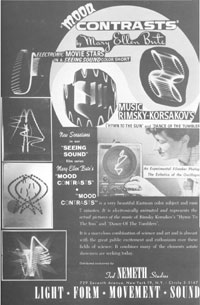
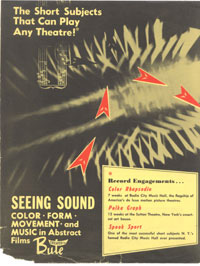
Promotional Flyers produced by Ted Nemeth Studios. From the Collection, and courtesy of Center for Visual Music.
Become a Member of CVM - support the expansion of these research pages and the distribution of her work
Donate - Support our work digitizing Bute's films, process materials and concept paintings
Contact us: cvmaccess at gmail dot com
email to join our mailing list: list (at) centerforvisualmusic (dot) org